
Casinos That Accept eCheck in the UK: How to Check
 Available in GB
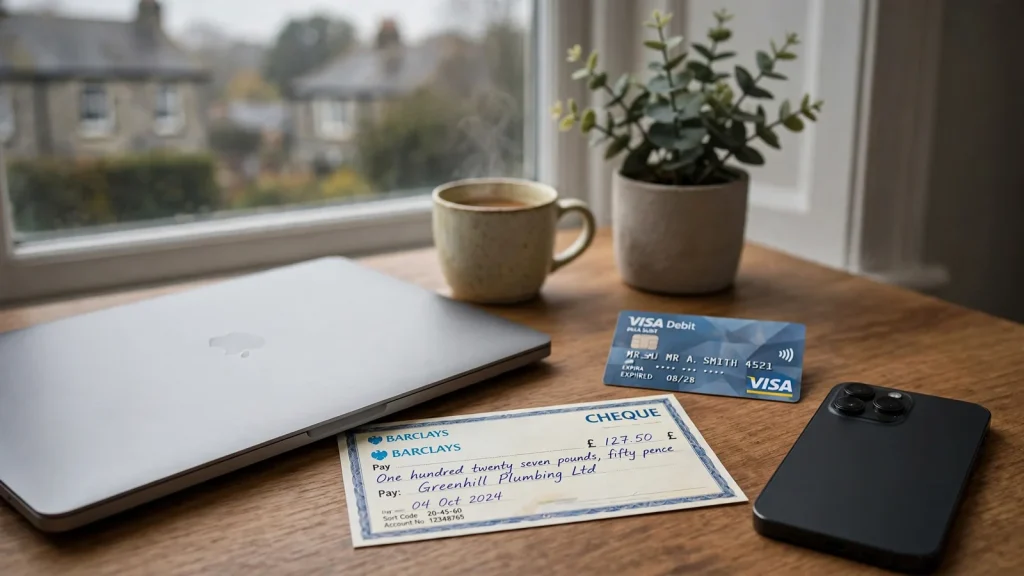
An operator’s current cashier listing is the key evidence; payment labels and third-party claims alone do not confirm availability.
How to Check Whether a Casino Accepts eCheck
No UK casino can be treated as a confirmed eCheck option without evidence from that operator’s own payment information. A general reference to electronic payments, or a third-party page using the term “eCheck”, does not establish that you can use it to fund your account. Before relying on eCheck, check the casino’s cashier and payment terms for an explicit, current listing.
The distinction is between a method being discussed and a method being available to you. A payment provider may support a type of transaction in some circumstances, while a particular casino does not offer it. Even when an operator lists a method, the cashier is the practical place to check whether it appears for your account. Payment options can depend on the operator’s arrangements and on the account you are using.
Look for an explicit eCheck listing
Start with the casino’s deposit page or cashier after signing in. Look for the exact term “eCheck”, rather than assuming that another label means the same thing. A page that mentions bank payments, electronic payments or online transfers does not, by itself, confirm eCheck acceptance. Nor does an explanation of how eCheck works in general show that the casino has enabled it.
Check the payment terms as well as the list of logos or method names. Terms may explain whether a named option is available for deposits, which account details it requires, and whether it applies to customers in the UK. If eCheck appears only in a general help article with no clear connection to the casino’s UK cashier, treat that as insufficient confirmation.
A specialist review might list Visa and Mastercard among a casino’s payment methods, but that does not establish eCheck acceptance. The same principle applies to any method named in a general review: it is not proof that the option is currently available in your account. Even card availability and eligible card products need to be checked in the cashier.
Casinos That Accept MuchBetter in the UK
Check the account you will actually use
Availability shown before signing in may not match the options displayed after you open an account. If the casino requires registration before showing its cashier, check the payment menu in your own account rather than relying on a page that describes the site in general. Make sure the country and account details are correct, because a payment list intended for another market may not apply to a UK account.
A method appearing in the cashier is stronger evidence than a general mention, but read the associated terms before proceeding. Confirm that the option is identified as eCheck and that the instructions describe the transaction you intend to make. If the label is unclear, do not guess based on a similar-sounding payment category.
You can ask the casino’s support team to clarify an ambiguous listing. Ask whether eCheck is currently available to UK customers for your account, and where it appears in the cashier. A clear answer tied to your account is more useful than a broad statement that the operator supports electronic payments. If the reply points you to a general page but does not confirm the option in your cashier, the question remains unresolved.
Casinos That Accept Ukash in the UK: What to Check
Treat third-party mentions cautiously
A casino comparison page, payment directory or forum post can help you find a term to investigate, but it may describe a different market, an older payment setup or a general capability rather than a live option. Check the operator’s own cashier and payment terms before acting on such a mention. The casino’s own information should identify the method and explain the conditions that apply.
Do not infer eCheck acceptance from the presence of a bank-related logo, a bank-transfer option, or a description of an electronic transaction. Those labels may refer to different payment routes. Likewise, seeing a method named on a page does not show that it is available for every customer or for every transaction type.
Use payment details that belong to you and match the information on your casino account. When the account and payment route belong to the same customer, basic ownership checks are less likely to create avoidable friction. This does not prove that eCheck is supported, but it helps keep the details consistent if you choose a method the cashier explicitly offers.
Do
- Check the casino’s cashier after signing in
- Look for the exact term “eCheck”
- Consult the operator’s payment terms
Don’t
- Assume “electronic payments” means eCheck
- Rely on third-party comparison pages
- Trust a general help article without cashier confirmation
If the casino does not name eCheck in its current cashier or payment terms, do not treat it as an available deposit option. Ask the operator for confirmation rather than submitting details under a different payment label. That simple check separates a general claim about eCheck from a method the casino actually makes available to your account.
Our top casino picks for the UK
- BeOnBetBonus: 100% up to €500 + 100 FS · Payout speed: 1-3 business days
- NightWinBonus: £900 + 400 free spins · Payout speed: 1-3 business days
- SlotoSportBonus: 500% up to £ 10 200+ 777 FS · Payout speed: 1-3 business days
- SpinFormulaBonus: 550% Up To £15,000 + 550 FS · Payout speed: 1-3 business days
- ZombillionBonus: Welcome Pack 250% up to £4000 + 200 FS · Payout speed: 1-3 business days
- NightLuckBonus: Welcome Pack + 805% Up To 6400€ + 280 FS · Payout speed: 1-3 business days
- JetsetspinsBonus: 200% Bonus + 100 Free Spins + Free Royal Wheel · Payout speed: 1-3 business days
- EvoSpinBonus: 125% up to €2500 + 125 Free Spins · Payout speed: 1-3 business days
- x3betBonus: Welcome Pack 100% Up to £1.000 + 200 Free Spins · Payout speed: 1-3 business days
Paying by Bank Transfer, Card or E-Wallet Instead
If a cashier does not show eCheck as an available option, other payment routes may be listed. UK casinos commonly accept debit cards, including Visa and Mastercard. Some sites also offer bank transfers or open banking, while e-wallet availability depends on the operator. These are separate payment methods: a bank transfer or wallet should not be treated as proof that eCheck is supported.
The cashier is the practical reference for the account you are using. A method mentioned on a general payments page may not appear for every customer, and a method available at one casino is not necessarily available at another. Treat the options below as routes to look for, not as a promise that every UK casino provides them.
Debit cards
A debit card lets you make a payment from a bank account using the card details or a supported card-payment flow. Visa and Mastercard debit cards are commonly accepted at UK casinos, but the logos on a site do not establish that every card product will work for every account. The cashier’s current options determine what you can select.
Casinos that accept Tether in the UK: what to check
Do not confuse a debit card with a credit card. Credit-card payments for gambling are prohibited at UK-licensed casinos, and routing credit-card funds through a money service business does not make the payment acceptable. Use an eligible debit card rather than assuming that a card bearing a familiar brand can be used regardless of its funding type.
A card route can also be distinct from a bank transfer, even when both ultimately involve the same bank account. The payment screen may ask for card details, while a transfer route may ask you to authorise a movement of funds through your bank. Read the method name and instructions shown in the cashier instead of choosing based only on the fact that both involve a bank.
Bank transfer and open banking
A bank transfer sends funds through a banking route rather than through a card payment. Open banking is another way a payment may be initiated from a bank account. Specialist casino reviews have described open banking and bank transfers as capable of providing instant deposits and fast withdrawals at many sites. That is a report about the services covered by those reviews, not a guarantee about every casino, bank, transaction or account.
Check the label and instructions before selecting a route. The casino may list a bank transfer, an open-banking service, or both; those labels should not be assumed to mean the same process. The casino’s cashier tells you which route it currently supports. The bank’s authorisation screen, where one is part of the flow, should also match the payment you intended to make.
Debit cards
Payments made from a bank account using card details. Visa and Mastercard are common, but credit cards are prohibited.
Bank transfer
Funds sent through a banking route. This is a separate process from card payments or eChecks.
Open banking
An alternative way to initiate payments from a bank account, which may provide instant deposits.
These methods are alternatives to eCheck, not different names for it. If you specifically require eCheck, selecting a bank transfer option does not establish that the casino accepts an electronic cheque. Use the method only if you are willing to pay through the route actually displayed.
E-wallets
An e-wallet sits between your bank or other funding source and the casino payment. Skrill and Neteller are available at some sites, rather than across the whole market. Specialist casino reviews have also reported that these wallets are often excluded from promotions. Because promotional terms can vary, check the offer conditions for the specific payment method before accepting a bonus.
A wallet can therefore be suitable for a payment even when it does not qualify for a particular promotion. Keep those questions separate: first confirm that the wallet is offered for your account, then check whether using it affects the promotion you intend to claim. Do not assume that an e-wallet listed by a casino is eligible for every offer.
Not every wallet has the same funding rules. UK remote gambling operators cannot accept wallet payments where the wallet allows credit-card funds to be used for gambling. A wallet’s name alone does not tell you whether a particular funding route is permitted; follow the casino’s instructions and do not use a credit-card-funded route for gambling.
Casinos That Accept Ethereum in the UK: What to Check
Choosing between the routes
Compare the methods by the actual process they offer, not by treating them as interchangeable. A debit card is a card payment; a bank transfer or open-banking option uses a bank route; an e-wallet uses a wallet account. Each may be listed differently in the cashier, and availability at one site does not establish availability elsewhere.
Before proceeding, make sure the displayed method is the one you meant to use and read any promotion conditions that apply to it. If the option you wanted is absent, do not substitute another method on the assumption that it is equivalent. A different route may have different terms, and it does not confirm eCheck availability.
Deposit Limits and Account Currency
A deposit limit is not a single figure that applies to every payment. The minimum may depend on the method selected, while the maximum can be set separately for one transaction, a day or a month. Account status can also affect the amount you are permitted to deposit. Treat each limit as a condition attached to your account and chosen route, rather than as a general casino-wide figure.
A specialist review reports that minimum deposits can fall within the £10–£20 range, depending on the payment method. That range is a reported guide, not a commitment that every cashier will offer those exact thresholds. The amount shown for your account at the point of payment is the figure to use: a method may have a higher minimum than another, and a payment below that threshold may be rejected even if the casino accepts the method.
Minimum deposits at some casinos can range between £10 and £20, depending on the chosen payment method.
Maximums need the same method-by-method check. A site may apply one ceiling to an individual transaction and separate limits over a day or month. Those controls can differ by payment method and account status, so seeing a maximum on a general information page does not necessarily tell you the amount available to your account. If the cashier shows a limit before you submit a deposit, use that rather than assuming a figure from another account or payment route will apply.
Check the limit against the amount you intend to deposit
Before entering payment details, compare the intended deposit with both ends of the permitted range. The minimum tells you whether the transaction can be accepted at all; the maximum determines whether the full amount can be submitted in one go or within the relevant period. If the deposit is outside the displayed range, do not assume the system will adjust it automatically. It may refuse the transaction or require you to enter a different amount.
Also check whether a stated cap applies per transaction, per day or per month. These measures are not interchangeable. A per-transaction maximum concerns one payment; a daily or monthly ceiling concerns the total over the stated period. A payment that fits under the single-transaction cap may still be unavailable if the account has reached a broader limit.
Account status matters because limits may vary with it. Do not infer that a limit displayed for a different account, or described without an account condition, will be available to you. Use the figures visible after signing in, and read any accompanying conditions before confirming a deposit. This is especially important when you are comparing methods: a larger permitted amount on one route does not mean that the same amount is available through another.
Casinos That Accept Boku in the UK: What to Check
Confirm the account currency first
The amount you enter and the amount recorded in the casino account may not be expressed in the same currency. Payment information for the sites reviewed states that GBP is supported, but you should still confirm the currency assigned to your own account before making its first transaction. A general statement that a site supports pounds does not establish that every account is set to GBP.
Look for the account currency in the cashier or account settings, then compare it with the currency shown on the deposit screen. If the account is denominated in another currency, a payment in pounds may be converted before the casino records it. The resulting account balance may therefore differ from the amount you expected by comparing the number alone. Currency symbols and labels matter: check them alongside the amount before submitting.
This check also affects how you interpret deposit limits. A minimum or maximum displayed in the account currency is not automatically the same numerical amount in pounds. If the cashier presents a limit in a currency other than GBP, establish what currency the limit uses before judging whether your intended deposit fits. Do not compare a sterling payment directly with a limit shown in another currency as if the units were identical.
Keep the checks separate: first confirm the account currency, then read the minimum and maximum for the selected method and the relevant period. That sequence helps prevent a simple mismatch between the amount you plan to send, the currency in which the casino records it and the limit that governs the transaction. If any of those details is unclear in the cashier, pause rather than relying on a figure described for a different account or route.
Attention: A minimum or maximum limit displayed in a currency other than GBP is not automatically the same numerical amount in pounds.
Checking Payment Options Before You Deposit
A payment method shown on a casino’s general information page is not necessarily enabled for your account. The cashier is the more useful check: it shows the options the operator makes available in the account you are using, and may distinguish methods for adding funds from those for receiving them.
Sign in before checking. Some cashiers display a different set of methods to logged-in customers than a public payments page does. Open the deposit area and look for the exact method name and any instructions attached to it. If you are checking for eCheck, do not treat a reference to electronic bank payments or bank transfers as confirmation that eCheck itself is supported. Payment labels can describe different systems, with different eligibility and transaction routes.
A specialist casino review may list Visa and Mastercard among a site’s payment options, but that does not establish that either card is currently available to every UK customer. Check the cashier for the method and confirm that your specific card product is eligible. A logo on a page is not enough to establish that you can use the card attached to your account.
Check the method in both directions
Deposit and withdrawal options are not interchangeable. A method can appear in the deposit cashier without being available for payouts. Before funding the account, check the withdrawal area as well and see whether the same method is shown there. If the cashier does not make the distinction clear, consult the operator’s payment terms or ask customer support to confirm how that method works for your account.
Casinos That Accept USDC in the UK: Payment Checks
This matters when a payment route is deposit-only. If you deposit through a method that cannot receive withdrawals, the operator may direct the payout elsewhere or request another route. Returning funds to the original payment source is a common anti-fraud and anti-money-laundering control. An alternative route can involve further ownership checks, so it is better to establish the expected route before making a deposit.
Do not assume that a method’s presence in one part of the account establishes its availability in another. Check the label beside the method, any deposit or withdrawal instructions, and whether the cashier presents it as usable for the transaction you intend to make. If the information conflicts—for example, a general page names a method but the account cashier does not—ask the operator to resolve the difference before proceeding.
Confirm account-level compatibility
Availability can depend on the account and the payment instrument, not just the casino’s general list. Check that the account is fully set up for the transaction and that the payment details match the customer’s account information. A mismatch can lead to additional checks or prevent the payment from being accepted. Use an account and payment route belonging to the same customer, and do not try another person’s payment details to work around a missing option.
Confirming Payment Compatibility
- Sign in to the casino account
- Locate the exact method name in the deposit cashier
- Check if the method is also available for withdrawals
- Verify that payment details match the account holder’s name
For a bank-linked method, check that the bank or payment service presented in the cashier is the one you can use. For a card, verify that the displayed option applies to your card product. For an e-wallet, confirm that the named wallet is actually offered in your account and whether it is available for the direction of payment you need. These checks are about the specific route shown to you, not just the payment brand named elsewhere.
If a method is absent, do not infer that a similar-sounding option will work. Ask support a precise question: whether the named method is enabled for your account, whether it accepts deposits, and whether it can also receive withdrawals. Keep the answer and the cashier’s instructions together so you can compare them if the available options change.
Make this check before authorising a payment. The cashier indicates what the account can use at that point; the operator’s terms explain any conditions attached to the method. Confirming both helps you avoid choosing a deposit route without knowing whether it fits the rest of your transaction.
What Happens Between a Deposit and a Payout
A deposit and a withdrawal are separate transactions, even when you use the same payment method for both. A deposit sends money from your payment account to the casino. A payout sends eligible funds back out, subject to the casino’s processing and payment rules. The time taken for one transaction does not establish how long the other will take.
Click2Pay at UK Casinos: How to Check Availability
After you submit a deposit, the payment provider or bank processes the request and the casino updates your balance when it accepts the funds. A specialist casino review describes card deposits as potentially instant, while a payout by card may take several business days. Treat that as an illustration of how the two stages can differ, not a timing promise for your account or a specific payment route.
A withdrawal starts with a request from your casino account. The casino must process that request before the payment provider can deliver the money. The amount shown as available in your balance therefore does not, by itself, mean that the funds have already been sent or received. A deposit can arrive quickly while the payout follows a separate route and timetable.
For UK players, the destination is also shaped by closed-loop rules. Anti-money laundering controls commonly require a payout to return to the original payment source. If you deposited from a card, for instance, the casino may need to send the withdrawal back to that card rather than to a different account you nominate. The casino’s cashier or payment terms should explain how it handles the route for your chosen method.
This matters when you are considering eCheck. A method’s appearance in general payment information would not, by itself, show that it is available to your account or that it can receive withdrawals. Nor does an ability to deposit establish that the same route will be used for a payout. The transaction flow depends on the method the casino actually supports and the applicable closed-loop rules.
How closed-loop rules work
Anti-money laundering controls often require payouts to return to the original payment source. For example, if you deposited using a card, the casino may require the withdrawal to be sent back to that same card.
If the original route cannot receive the payout, the casino may ask you to use an alternative and complete additional checks. That can change the steps required, even though the deposit has already succeeded. Keep the payment account details and casino account information consistent, and read the withdrawal instructions before relying on a particular route.
The practical sequence is therefore: funds leave your payment account, the casino credits the deposit, you later request a withdrawal, the casino processes it, and the payout is sent through an accepted route. A fast first step does not guarantee a fast final one. Check the casino’s own terms for the route and status of your transaction rather than treating deposit speed as a forecast of payout delivery.
Making an eCheck Deposit: What to Confirm First
Before entering bank details, check that the casino names eCheck as an available deposit method in the cashier and explains how to use it in its payment terms. A general reference to electronic cheques does not establish that the method is enabled for UK customers or for your account. If eCheck is absent from the available options, do not treat it as a supported route or submit details through another payment option.
Casinos That Accept E-Cheques in the UK
Next, read the deposit limit shown for the selected method. Minimums can differ by payment route, so a limit displayed for a card or bank transfer should not be assumed to apply to eCheck. One specialist review puts some casino minimum deposits in the £10–£20 range, but that is not a universal eCheck limit. Use the figure displayed by the casino for your account, and check any maximum that applies to the transaction or account.
If the cashier lists Visa or Mastercard, confirm the current UK availability and eligible card product there before paying. A method name on a general site page does not confirm that every card or account can be used. In the UK, credit-card payments for gambling are not permitted at UK-licensed casinos; do not try to route a credit card through another service to fund gambling.
Before confirming a deposit, make sure the amount is within the displayed limits and that the payment method selected is the one you intend to use. If the cashier’s wording is unclear, ask the operator to clarify whether eCheck is available for your account and what limit applies. Do not rely on a method label, an old review, or an assumption that a payment option works simply because it is offered elsewhere.
Payment Fees and Currency Conversion
A payment can have more than one cost attached to it, so a zero-fee label does not necessarily mean that the transaction is free. A specialist payment review identifies possible charges from the casino, the payment provider, the card issuer or bank, currency conversion, and the payment network. Which of these applies depends on the route and the terms of the organisations involved.
Separate the charges by who sets them. The casino may display a transaction fee in its cashier or payment terms. A provider, bank or card issuer may apply its own charge outside the casino’s control. If the payment crosses currencies, the conversion rate can also affect the amount credited or taken from your account. A network fee may apply to some payment routes as well.
Hidden Costs
Currency conversion spreads can cost more than a visible flat fee, potentially reducing the final amount credited to your account.
The exchange rate deserves particular attention because its cost may not appear as a separate line. A specialist payment review notes that the conversion spread—the difference between the rate used for the transaction and a reference market rate—can cost more than a visible flat fee. That does not mean it will in every case; it means comparing only stated fees can give you an incomplete picture.
For an eCheck payment, check the casino’s stated charges and the provider’s terms, then see whether either party applies a conversion. Compare the total amount that would leave your bank account with the amount the casino would credit, using the same transaction details. If the provider quotes a rate, check whether it includes its margin; if it does not, the final cost may be harder to assess from the displayed fee alone.
Do not assume that the casino is the only party setting the price. A useful comparison accounts for every charge that applies to the specific payment route and amount, including any exchange-rate spread and network cost. Where the terms do not make the calculation clear, ask the relevant provider or casino before authorising the payment.
Why a Casino Withdrawal Can Take Longer
A withdrawal does not move straight from your request to your bank or payment account. The casino first has to review and approve it. A specialist review identifies this internal approval and the status of your account verification as factors that affect how long processing takes. Until the review is complete, a submitted request may not yet have been released for payment.
Casinos That Accept Interac in the UK: Payment Checks
Verification can add a step when the casino has not finished checking your account. This can be more noticeable on a first withdrawal: the casino may need to complete its checks before approving the request. The same review describes first withdrawals as potentially taking longer while verification is completed. That does not establish a fixed waiting period; the time depends on the operator’s process and whether your account is fully verified.
You can separate two questions when checking a delay: has the casino approved the withdrawal, or is the request still being reviewed? If it remains under review, the next action depends on the casino completing its internal process or any outstanding verification. If it has been approved, the review stage is over, but that status alone does not tell you when the funds will arrive.
For an eCheck casino withdrawal in the UK, first confirm that the cashier actually offers eCheck for withdrawals on your account. A method’s name, or a general mention of it, does not confirm that it is available to you. If it is available, read the casino’s stated processing information and check whether your account verification is complete before relying on a particular timeframe.
If a request is taking longer than the casino’s stated process suggests, contact its support team with the withdrawal status shown in your account. Ask whether approval is pending or verification remains incomplete. That identifies which part of the process is holding the request, without treating the time taken by one stage as the time taken by the entire transaction.
Checking Withdrawal Delays
Identify the status
Check if the withdrawal request is still under review or has been approved.
Check verification
Confirm whether your account verification is complete, as this can delay first-time withdrawals.
Contact support
If the request exceeds the stated processing time, ask support if approval is pending or verification is incomplete.
Keeping Payment Details Consistent on a Casino App
When you use a casino app, the account details and payment route should identify you as the same customer. If the account is in your name but the payment method belongs to someone else, the operator may need to resolve a basic ownership mismatch before it can process the transaction. Using your own details consistently reduces the chance of that avoidable friction.
This applies whether you are considering an eCheck or another payment method: the app’s availability does not establish that a particular method is supported, or that it is suitable for your account. Check the cashier and the operator’s payment terms rather than entering details based on a method label seen elsewhere. If the method is offered, make sure the payment account is yours and that the details you provide match the relevant account records.
A consistent route also makes it easier to follow the transaction history. When you use one named account for deposits and withdrawals, the records are less likely to be split across different payment identities. That can help you recognise which account was used and make a later transaction easier to reconcile. Switching between accounts or using another person’s payment details can make the ownership trail less clear and may lead to further checks.
Before confirming a transaction in the app, review the account name and the selected payment account. Correct an error before submitting rather than trying to explain a mismatch afterwards. Keep access to your casino account and payment account private; consistency should mean using your own details, not sharing credentials or allowing another person to transact through your profile.
These checks do not guarantee that a transaction will be accepted or processed without review. They address one avoidable cause of confusion: details that point to different people. For a clear record, keep the casino account and payment route tied to you, and use the same named route consistently where the operator permits it.
Casinos That Accept iDEAL in the UK: What to Check
UK Rules to Check Before You Fund an Account
Before making a first deposit, check that the casino is operating under a current UK Gambling Commission (UKGC) licence. Remote gambling licensees serving customers in Great Britain must hold the relevant licence, and they must verify your age before allowing you to deposit. Online gambling is legal in the UK for people aged 18 and over when the operator holds a UKGC licence.
A further safeguard applies before your first deposit: the operator must prompt you to set a financial limit. This is an account-level control, not a payment-method limit. It lets you set a boundary on your gambling funds through the casino account. The operator must also make account-level limit controls accessible, so you can find and use them without relying on a payment provider’s settings.
Check these controls in the account interface before funding it. If the prompt does not appear, or you cannot locate the controls, pause and contact the operator rather than treating the omission as a routine part of payment setup. A payment option such as eCheck, if shown in a cashier, does not replace these UK safeguards.
Credit-card payments for gambling are prohibited. The regulator introduced the ban on 14 April 2020, and it remains in force. Remote operators cannot accept credit-card payments for gambling, including credit-card funds routed through a money service business. They also cannot accept wallet payments where the wallet allows credit-card funds to be used for gambling. A displayed payment brand alone therefore does not establish that every way of funding that account is permitted.
These checks concern the operator and your account, not the speed or convenience of a particular payment route. Confirm that the site is UKGC-licensed, that your age has been verified, and that the required financial-limit prompt and account controls are present before depositing.
Why can a fast-payout casino still delay my withdrawal?
Your withdrawal may still need the casino’s internal approval, and verification can add time, especially for a first payout. A quick deposit does not guarantee a quick withdrawal.
Can I deposit in GBP?
Yes, GBP is supported, but check your account currency before your first transaction to avoid conversion costs.
What is the current minimum deposit?
The minimum deposit usually starts at £10–£20, depending on the payment method.
Which method has the lowest fees?
There is no universal lowest-fee method. Compare casino and provider charges, any currency-conversion spread, and network costs for the amount you plan to deposit or withdraw.
Which payment methods are accepted in Great Britain?
UK casinos commonly accept Visa and Mastercard debit cards; some also offer bank transfers or open banking, PayPal, Skrill, Neteller and Paysafecard. The options available to you depend on the casino and should be checked in its cashier.
Gransino Payments UK: Deposits, GBP Evidence and Cashier Checks
Created by the "Gransino Casino" editorial team.